
With another college semester approaching, students and families may be reviewing how they’ll cover tuition, textbooks, housing, and other education-related expenses.
Scholarships, grants, savings, and federal student aid can help, but they don’t always cover the full cost of attending college.
For students facing a remaining funding gap, private student loans may be worth exploring.
One established provider in this space is Sallie Mae, which offers private education financing for undergraduate, graduate, and eligible specialized programs.
After taking a closer look at Sallie Mae’s loan options, repayment flexibility, and application process, what stands out to me is the range of choices available to students with different educational needs.
However, private student loans are a significant financial commitment, and understanding the terms before applying is essential.
Explore Sallie Mae Student Loan Options
What Is Sallie Mae?
Founded in 1972, Sallie Mae has evolved from its origins as a government-sponsored enterprise into a private financial services company.
Today, Sallie Mae Bank offers private student loans designed to help eligible students and families finance education expenses.
Its loan offerings cover several educational pathways, including undergraduate studies, graduate programs, medical school, dental school, law school, and MBA programs.
This variety makes Sallie Mae relevant to students at different stages of their education.
Key Benefits of Sallie Mae Student Loans
- Private loan options for undergraduate and graduate education.
- Fixed and variable interest rate choices.
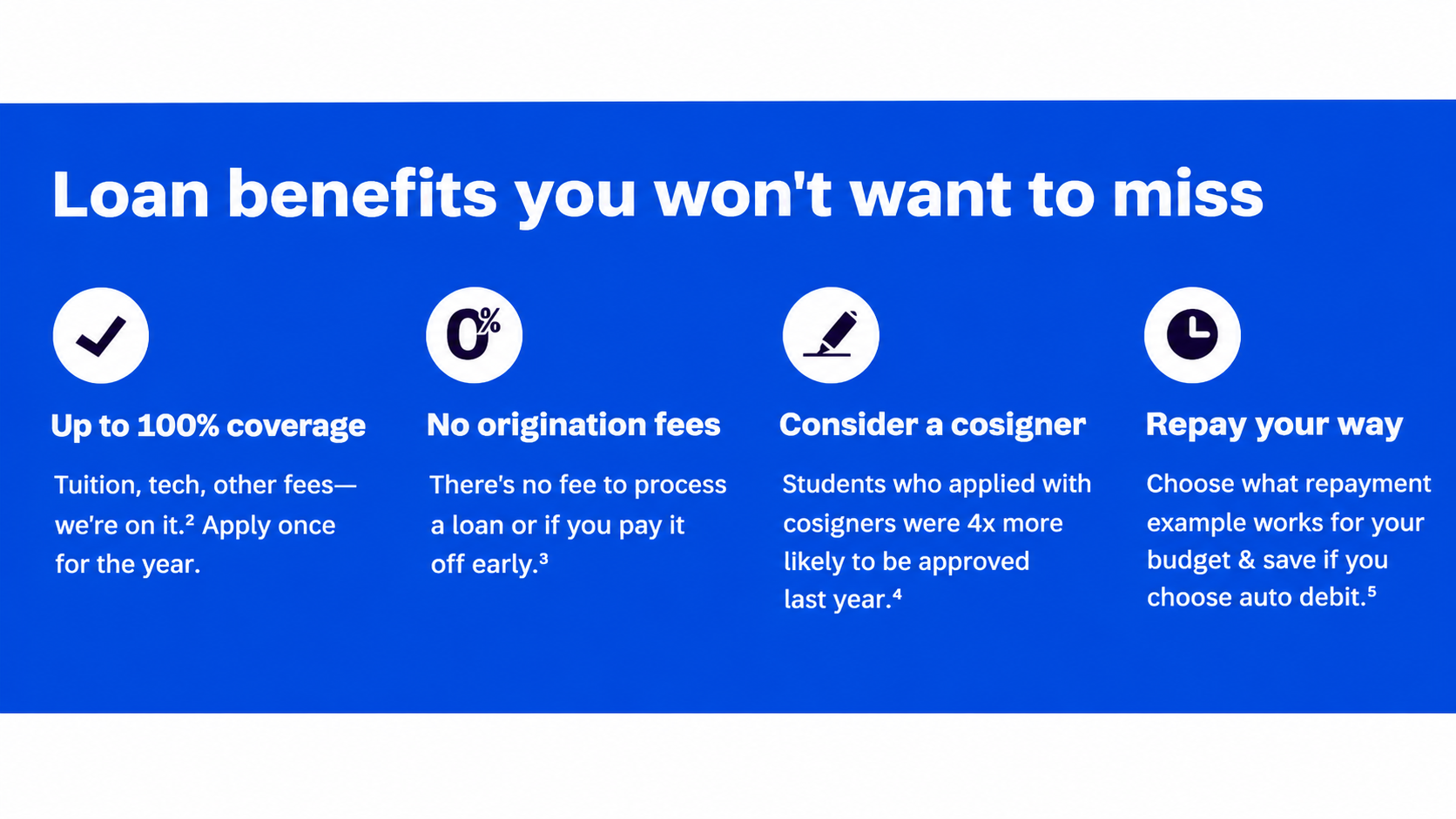
- Three undergraduate in-school repayment options.
- Financing for up to 100% of eligible school-certified costs, less other financial aid.
- No origination fees or prepayment penalties.
- The option to apply with a creditworthy cosigner.
- Prequalification with a soft credit check before submitting a full application.
Sallie Mae Student Loan Options and Interest Rates
Sallie Mae offers different loan products depending on the student’s educational program.
Its undergraduate loans are designed to help cover eligible college expenses, while specialized graduate loans address financing needs for advanced degrees and professional education.
What Are Sallie Mae’s Student Loan Interest Rates in 2026?
As advertised on Sallie Mae’s undergraduate student loan page, with rate information dated October 26, 2026:
| Rate type | Advertised APR range |
|---|---|
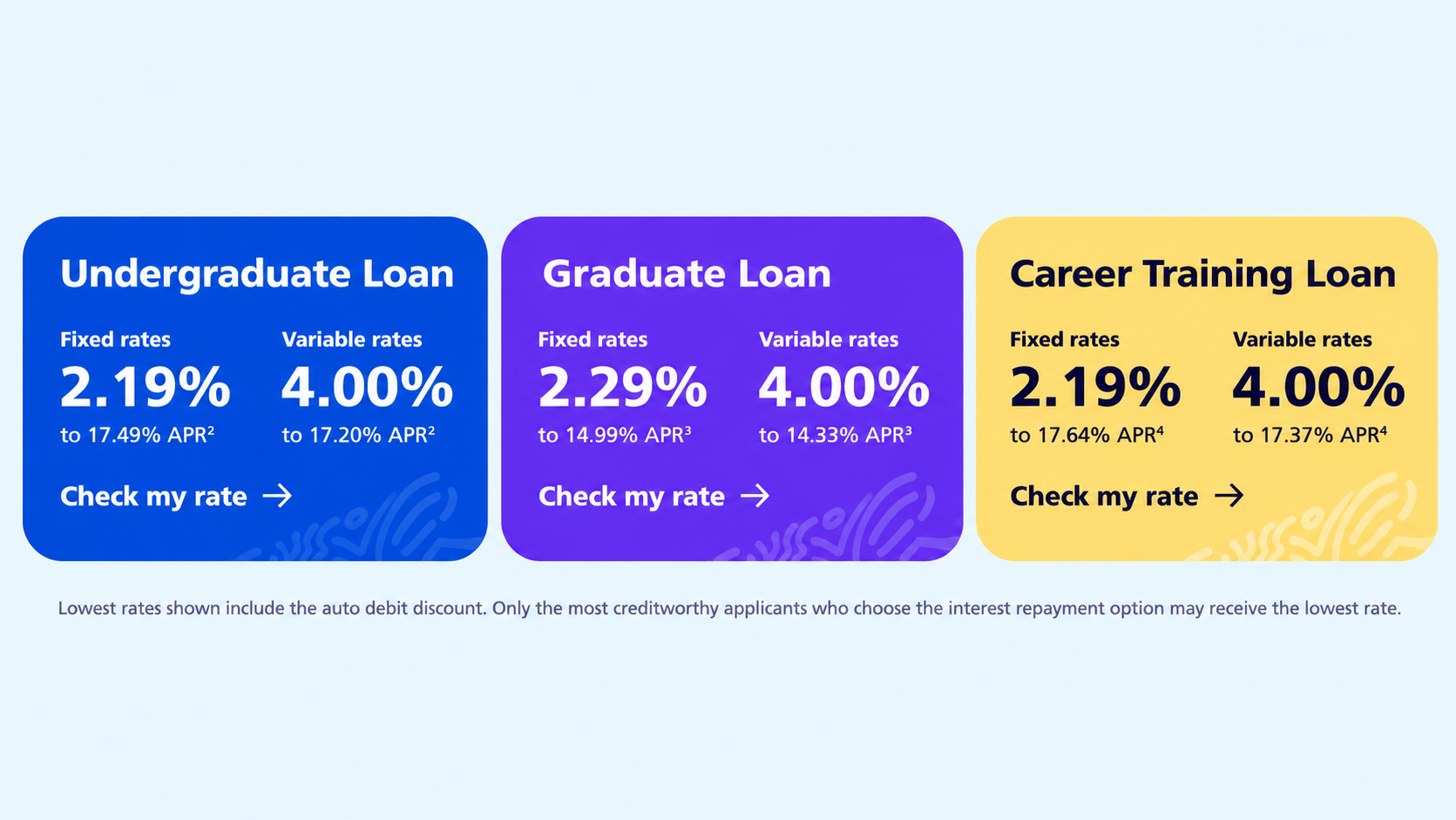
| Fixed interest rate | 2.19%–17.49% |
| Variable interest rate | 4.00%–17.20% |
The lowest advertised rates include an eligible automatic payment discount and are available only to qualifying borrowers who select the interest repayment option.
Actual rates depend on creditworthiness, loan terms, repayment choices, and other eligibility requirements.
Fixed rates remain unchanged throughout the loan term, while variable rates can increase or decrease over time.
Because rates can change, students should always check Sallie Mae’s current offers before applying.
Understanding Sallie Mae’s Repayment Options
One of Sallie Mae’s most useful features is the ability to choose how payments are handled during school.
For eligible undergraduate loans, borrowers can select from three repayment options.
| Repayment option | How it works |
|---|---|
| Interest repayment | Make monthly interest payments while attending school and during the grace period |
| Fixed repayment | Pay $25 per month while in school and during the grace period |
| Deferred repayment | Make no scheduled payments during school or the grace period |
For these undergraduate loans, the selected repayment arrangement generally continues through a six-month grace period after leaving school.
What I find important about these choices is how they affect the total cost of borrowing.
Making interest payments during school can reduce the amount of unpaid interest that accumulates.
Deferring payments may provide more immediate financial flexibility, but it can increase the overall loan cost.
Compare Sallie Mae Loan Options
How Does the Sallie Mae Application Process Work?
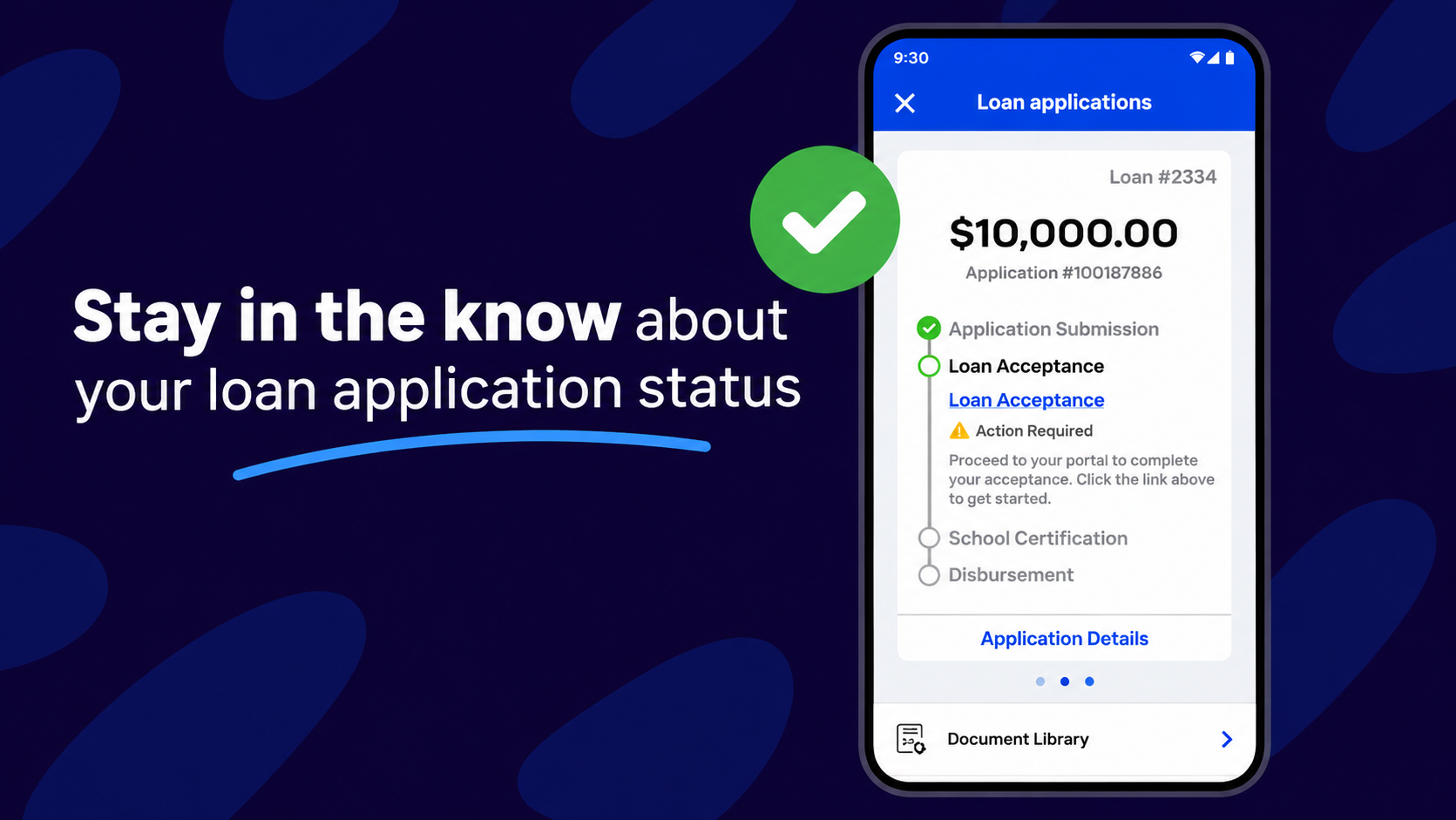
Students preparing for the next semester should understand that obtaining a private student loan involves more than receiving an initial credit decision.
Sallie Mae allows prospective borrowers to check whether they prequalify using a soft credit inquiry.
This provides an opportunity to explore estimated rates without immediately completing a full loan application.
However, prequalification does not guarantee approval.
A full application involves a hard credit inquiry and additional eligibility checks.
Students may also apply with a creditworthy cosigner, which can improve their chances of qualifying.
After approval, the borrower must accept the loan terms, and the school generally needs to certify the borrowing amount before funds are disbursed.
Sallie Mae indicates that the process typically takes around 10 business days from application to disbursement, although individual circumstances can affect timing.
For anyone approaching a tuition payment deadline, I would recommend beginning the comparison process early rather than assuming funds will be available immediately.
Should You Apply With a Cosigner?
A cosigner is someone who agrees to share legal responsibility for repaying the loan.
This can be particularly relevant for students who have limited credit histories or insufficient income to qualify independently.
Sallie Mae allows eligible borrowers to apply with a cosigner and offers a cosigner release process for borrowers who meet its requirements.
For eligible loans, borrowers may apply for release after completing their program and meeting credit, income, and payment-history requirements, including 12 qualifying principal-and-interest payments or an equivalent lump-sum payment.
However, release is not automatic, and payments made under certain in-school repayment arrangements do not count toward that requirement.
Students and cosigners should carefully review the full eligibility criteria before borrowing.
Sallie Mae vs. Federal Student Loans
Before considering private education financing, students should review their federal financial aid eligibility.
Federal student loans generally offer important borrower protections that private loans may not provide, including certain income-driven repayment options, deferment benefits, and potential loan forgiveness programs.
For federal Direct Loans first disbursed between July 1, 2026, and June 30, 2027, the fixed interest rates are:
| Federal loan type | Interest rate |
|---|---|
| Undergraduate Direct Subsidized and Unsubsidized Loans | 6.52% |
| Graduate or professional Direct Unsubsidized Loans | 8.07% |
Private student loans may advertise lower starting rates for highly qualified borrowers, but their terms and protections differ.
My view is that students should explore scholarships, grants, and available federal financial aid before using private loans to cover a remaining funding gap.
Sallie Mae Student Loans: Pros and Cons
| Pros | Cons |
|---|---|
| Multiple undergraduate and graduate loan products | Approval and rates depend on creditworthiness |
| Fixed and variable rate options | Variable interest rates can increase |
| Three undergraduate repayment choices | Deferred payments can increase total borrowing costs |
| Soft-credit-check prequalification | Full applications require a hard credit inquiry |
| No origination fees or prepayment penalties | Private loans lack some federal borrower protections |
| Cosigner options | Cosigners share responsibility for repayment |
Frequently Asked Questions About Sallie Mae
Can Sallie Mae help cover college expenses before next semester?
Eligible students may use Sallie Mae private student loans for approved education expenses, subject to credit approval, school certification, and other requirements. Application and disbursement timing should be checked against the school’s payment deadlines.
Does Sallie Mae offer fixed and variable interest rates?
Yes. Eligible borrowers can choose between fixed and variable rates. Fixed rates remain constant, while variable rates may change over time.
Can I check my Sallie Mae rate without affecting my credit score?
Sallie Mae offers prequalification using a soft credit inquiry. A full loan application requires a hard credit inquiry.
Does Sallie Mae require a cosigner?
Not every borrower needs a cosigner, but applying with a creditworthy cosigner may improve approval chances.
Can Sallie Mae loans cover the full cost of college?
Eligible undergraduate loans may cover up to 100% of school-certified attendance costs, minus other financial assistance, subject to approval and program conditions.
Final Thoughts: Is Sallie Mae Worth Considering Before Next Semester?

After reviewing Sallie Mae’s student loan offerings, what stands out to me is the combination of educational financing options, repayment flexibility, and access to prequalification.
For students who have already explored scholarships, grants, and federal student aid, Sallie Mae may provide another way to address a remaining education funding gap.
Its range of undergraduate and specialized graduate loan products makes it relevant to several types of borrowers.
However, the decision should never depend solely on an advertised interest rate.
Students should consider the total repayment cost, cosigner responsibilities, eligibility requirements, and whether the loan fits their longer-term financial circumstances.
For eligible U.S. students preparing for the next semester, Sallie Mae is a private student loan provider worth comparing in 2026.
Explore Sallie Mae’s Student Loan Options
Why Choose Sallie Mae Over Other Private Student Loan Lenders?
When comparing Sallie Mae with alternatives such as College Ave and SoFi, I think the most useful consideration is whether its specific loan products and repayment choices align with the borrower’s educational needs.
Sallie Mae offers undergraduate financing alongside specialized options for graduate and professional programs, including medical, dental, law, and MBA education.
Its three undergraduate repayment options allow borrowers to choose between making interest payments, paying a fixed monthly amount, or deferring scheduled payments during school.
The ability to check potential rates through prequalification is another useful feature for students comparing lenders before committing to a full application.
However, Sallie Mae isn’t automatically the most suitable choice for every borrower.
Other lenders may offer different repayment terms, rates, cosigner conditions, or additional features.
The strongest reason to consider Sallie Mae is the combination of its education-focused loan products and repayment choices, provided the actual loan terms are competitive for the individual borrower.